To explain how something as complex as the universe (and its life) could have formed, seemingly against all odds, some have used the illustration of monkeys jumping on typewriters. “If they jump long enough, eventually they will produce complex sentences.” But the formation of a complex sentence overlooks a crucial prerequisite for its existence: language.
Without language—with its grammar, syntax, and meaning that it conveys—a million monkeys could never form even the simplest sentence. In a non-lingual or alingual chaos, they could not form so much as a “yes” or “no” as we know it, for even if the letters were present, there would be no significance or meaning conveyed by them. It is meaning that takes the raw materials of letters (in written language) or sounds (in spoken language) and turns them into words and sentences. Without this meaning, the letters would be merely shapes, and sounds would be babble. In short, the stream of letters produced by the monkeys’ typewriters would be unintelligible.
Here’s a computer science illustration: Let’s imagine a machine that generates an endless and entirely random stream of 1’s and 0’s. How long will it be before that machine produces a program? Or even a single line of code? The answer, of course, is that it cannot—not without a programming language and the necessary hardware to endow the 1’s and 0’s with meaning. Again, without preexisting language to turn the chaos into something intelligible, nothing meaningful could ever form. The rules and structure of language are necessary to intelligibility in the first place.
Clearly, we do not live in an unintelligible universe. So the materialist must assert that, even in the extreme chaos of the big bang, there was a language infused in its very nature that made it orderly and intelligible. (If our universe were ever not intelligible, our physicists should then quit their effort to understand its origins.) This is nothing controversial. The materialist calls this preexisting orderliness and intelligibility “natural law.” So, if the history of the universe following the big bang corresponds to monkeys banging on typewriters or a machine generating random 1’s and 0’s, natural law is the “language” that endows the chaos with meaning and intelligibility. Just as language provides the necessary structure to create complex (and beautiful) sentences or complex computer programs, so natural law provides the structure in the universe necessary to its complexity, including the astounding chemical, biological, and psychological complexity of life.
The material universe is not an absolute chaos, deaf and dumb to law. It is not a meaningless stream of 1’s and 0’s, or an endless onslaught of arbitrary syllables. It is ordered. It is more complex than any language uttered, and more beautiful. And it is the materialist’s continued assertion that, before there was intelligence of any sort, the universe was intelligible. The materialist must say that intelligence (e.g. human intelligence) itself is the product (via evolution) of the inherent intelligibility of the universe.
This assertion is certainly not contrary to reason—it is simply their answer to a chicken/egg problem: Which came first, intelligence or intelligibility? It doesn’t matter which side one wants to take in that paradox, an explanation is warranted.
Yet there is no explanation offered (at least as far as I’m aware) by the materialist as to why one should believe that order came before intelligence. Certainly the materialist can understand the devil’s advocate wanting to know how there came to be order, complexity, data, language, etc. in a literally mindless universe. Why is their coming to be ex nihilo any less ridiculous than belief in a creator who creates ex nihilo? Believing that the intelligibility of the universe came before all else and for no reason seems to be a blank assertion. It does little else other than set the stage nicely for the evolution narrative. But order and complexity existed prior to evolution. Life could never have originated in a universe that was formless and void.
So, while belief in the inherent (yet arbitrary) intelligibility of the universe is not a violation of reason, I would argue that it much more natural to take the opposite position—i.e. that the order and complexity of the universe is the product of a preexisting intelligence. In other words, just as human intelligence bestows the necessary meaning upon language in order to turn the chaos of syllables or 1’s and 0’s into complex and meaningful phrases, likewise the complex and meaningful universe has had its “language,” so to speak, bestowed upon it by an intelligence.
As I said before, it doesn’t matter how we answer the chicken/egg problem of intelligence vs intelligibility, an explanation is warranted. So, why is it more natural to assert the preexistence of intelligence?
Imagine that you have come into possession of a letter. In this letter there is a sketch of a map with a starting point marked on it, below which is written a long set of instructions, each one very precise, that explains where you should move from that starting point. After going to the starting point and following the exceedingly long list of directions to a tee, traveling many miles over vast and empty wilderness, you get to the very last instruction which says, simply, “dig.” So, you set your shovel to the dirt and before long unearth a trove of treasure of an immense scale, containing things more beautiful than you have ever imagined.
What should we say, then, about the letter? It seems sensible to conclude that getting to the treasure was the objective from the very beginning. The letter might merely have been complex and precise and yet led nowhere. But the fact that it led exactly to the treasure suggests that the directions were written purposively. The outcome suggests that intelligence (or purpose, or intention) preexisted and caused the complexity and exactness of the directions in the letter.
Likewise, in nature we find that the universe is not merely ordered and exact, but we find that its order has produced a fountain of wonder and beauty all around us that is renewed and expanded every day. It has produced a treasure literally inconceivable in scale, encompassing stars and galaxies, ecosystems, landscapes, fauna, families, and smiling children. At every level, there are innumerable “directions,” as precise as we can imagine—natural laws that could have been anything else but are not—that led us here. The blank assertion that natural law, as bountifully wonderful as it is, is arbitrary, and not established with purpose or intention, is a continual uphill struggle against intuition.
When deciding whether intelligence or intelligibility came first, it is important to consider that neither option is the logically necessary conclusion. Regardless of how we answer this question, we should not pride ourselves on having answered from a process of pure reason. The above illustration the treasure map is by no means an incontrovertible argument. In the end, we have no direct, tangible, scientific evidence to settle the debate. We can only consider each of the two possibilities and do our best to decide which one sounds more reasonable:
A) The universe is ordered for no underlying reason, capable of producing unlimited complexity, including intelligence itself.
Or
B) The order of the universe is a product of design—that its complexity is not arbitrary but intentional.
We can think of it as a fork in the road of a rational understanding of the universe. We can take the “A” route and come to a coherent, if not comprehensive, view of the world. Many brilliant minds have. Likewise for option B. The work lies in following the “A” route and the “B” route as far as they’ll go, of course without stepping off the path of rationality. The one whose end lies closer to our world, our lives, and our selves will hold the best promise of veracity.
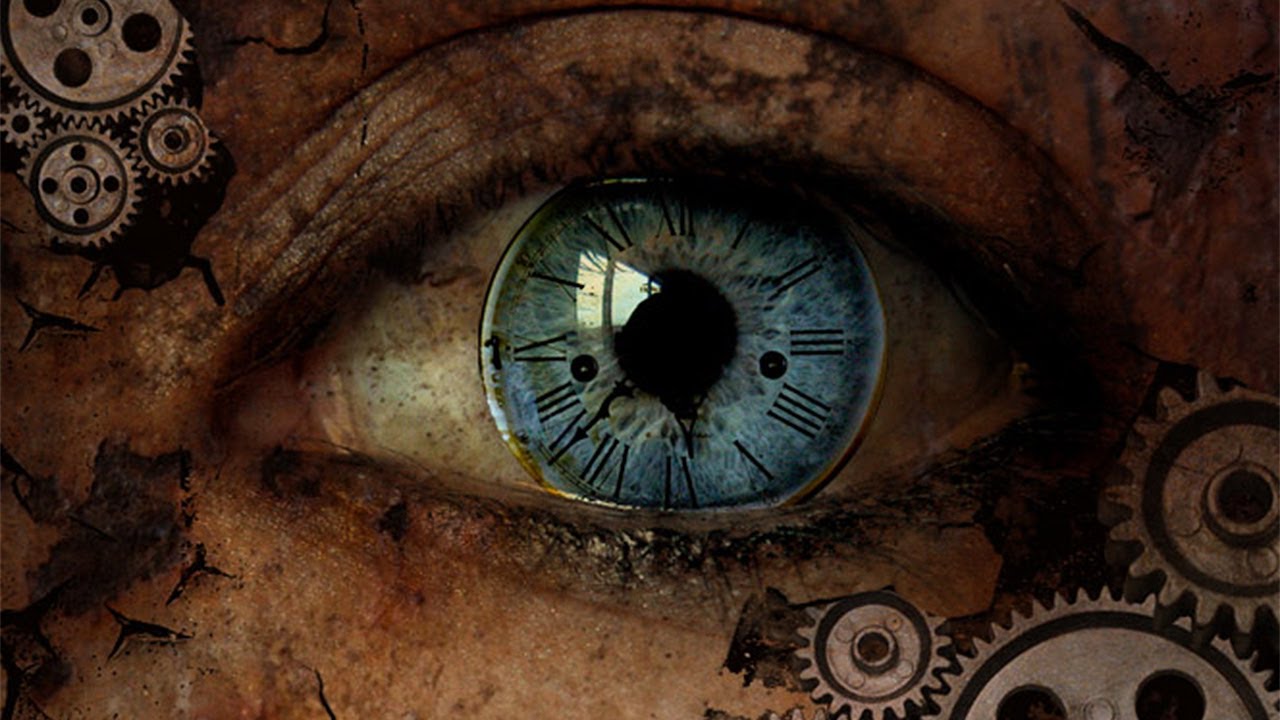
On its face, the “B” route smells more promising. If the intelligibility of the universe led eventually to the treasure trove of human intelligence, even before the “clockwork” of evolution could begin, then it seems sensible to ascribe intentionality to the process from the beginning.
 bonesofbelief