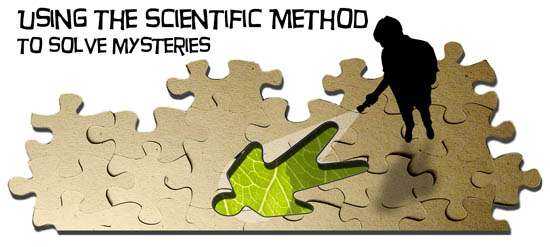
The trouble with critiquing the naturalist or materialist position is that the rebuttal from their camp is automatic and predictable: belief in super-material or divine force at work in the universe is unscientific. In other words, it does not matter how awkward materialist explanations are, or to what extent their assumptions and explanatory mechanisms must be stretched in order to explain the world as it is, there is at least proof to support their beliefs. Their explanations are arrived upon by a rigorous process of repeated experiment, which is far more than could ever be said of the man wildly making unverifiable claims of a transcendent being, an intelligent designer, or God.
The materialist is absolutely correct in saying so. Demanding evidence for belief is entirely rational. We believe in the theory of relativity because we have seen light bend around stars. Yet God has not been seen by any microscope or telescope; he has not appeared in our beakers or caused any anomaly in our data. Indeed, our understanding of the world gets along quite well without him, so, they say, what is to be gained by positing a “designer,” “god,” or “the transcendent”? There is just no evidence that points to its existence. So the materialist’s criticism is justified, but only in a restricted sense. Granted, you will never see God with a telescope or microscope; he will not appear in our labs or in our data. But we must understand what they mean by “evidence.”
To the materialist, the term refers to a set of data points discovered by observation that are given meaning by a natural law that explains them. “Observation” here refers to information gathered by our five senses — sight, sound, smell, taste, and touch. These are our access to the outside world, so why would it be controversial to rely on these to seek truth about the world?
The materialist would say that these five senses developed for the sake of our survival. They are the means by which we protect ourselves from the myriad of mortal dangers in nature. Our senses are only the present result of a process of evolution — i.e. the dying away of those creatures whose senses or lack thereof proved inadequate for survival.
But if we accept that the basis of our senses is merely evolutionary, why do we treat them as if they are somehow the supreme arbiter of what exists? It is an unqualified leap to begin with saying that our senses pertain to the material world and somehow conclude on that basis that nothing but the material world exists. Yes, the scientific process concerns itself with the material universe, but by what argument does the materialist proceed to the position that material is all there is?
Here we are butting up against the claim made in my first post: There can be no argument that leads to one’s definition of the ultimate. One can only claim what is ultimate by presupposition. Only after one presumes what is ultimate can one then try to make sense of the rest of the world by rational argument. The best way to see if you’re right about what is ultimate in the universe is to see how much sense of the world you can make based on your presuppositions.
So, because the materialist presumes that the universe is, ultimately, nothing more than matter, energy, and natural laws, their only path toward knowledge and toward truth is through our senses and the scientific process (which is sensory data plus intellect). Science is no joking matter to them. We can understand why the accusation of being “unscientific” is such a big deal in that camp. Rejecting science and its process means turning our back to our only source of truth — a return to the dark ages. It is the materialist equivalent to heresy.
But if we can take a step outside of the materialist paradigm, and observe from the outside looking in, we might notice that the sanctity of their scientific process begins to look more like a game. If the objective is to explain the universe, the rules of the game are that the explanations cannot refer to the existence of anything other than causal relationships found in matter and energy. You cannot invoke the divine as explanation. That is breaking the rules. Thus the natural laws that guide matter and energy must explain everything.
When viewed from the outside, the entire scientific endeavor begins to look more like the solving of a puzzle than a search for meaning. You want truth? Solve for x. Do you want your life to be meaningful? There’s a scientific reason for that. If you are seeking answers, you might be disappointed that science only offers solutions.
It cannot be denied that those who play the science game have made astonishing progress. As deeply as we have probed into the workings of nature, it has proven to be beautifully predictable, yet elegantly complex. The discoveries of science are mesmerizing, and they have been able to explain it without invoking divinity or designer — a remarkable human achievement. But does the success of the science game prove materialism and disprove belief in a designer or divine being? How could it? They are only following the rules of the science game. It is rationally apparent that the science game would be just as successful in an orderly universe created by a god.
Again, because materialism is the presupposition of the materialist, nothing following that presupposition can go back upstream and prove that the presupposition is true. Rather, materialism serves as the rational basis from which the materialist builds the rest of his worldview. The results are indeed impressive, but their great difficulty comes when we consider those aspects of the world or of human experience that appear to fit uncomfortably, if at all, into the materialist narrative. Such problems as the fundamental intelligibility and fine-tuned precision of nature, the baffling mystery of a mindless universe creating minds, the question of how material creates consciousness, the burning desire in human hearts to find meaning and truth, the creative and intellectual genius with which we seek it — all these begin to appear like pieces of a jigsaw puzzle being forced into places they don’t belong. Not only is it puzzling how material would create all these phenomena, it is equally puzzling why it would.
The materialist will always assert that the scientific process can explain the how of these puzzles. They must. Absolute confidence in the scientific process is required to maintain the coherence of the belief system. And they see no need to answer the why question. It is all merely causation. So away they go, plugging away at the scientific endeavor, searching for the last of their answers.
An inquisitive student might understandably balk when told he must accept that the universe displays its mathematical perfection, and humanity its joy and suffering, all for no reason, and for no ultimate purpose. Yet when one suggests that a divine creator or designer is responsible for those more profound mysteries of the universe, the accusation of being “unscientific” does not come lightly. The materialists are not correcting a wayward thinker, they are condemning a defector. Someone who is unscientific forsakes Truth. Someone who is unscientific is regressive, slouching back into the dark ages.
But the sting of being “unscientific” only affects those in the materialist camp. For those outside the camp, the charge falls flat. Who cares if belief in the divine violates the rules of the science game? What if the divine actually exists? What if the mystery of the universe could be better explained by some transcendent order or higher purpose than the materialist’s explanation of chaos and causation? The presupposition that only material exists doesn’t itself disprove the divine, it merely bars it from consideration. What if the presupposition is wrong?
Of course the puzzling and profound questions of the universe do not disprove the materialist presupposition. There is no knock-down, drag-out argument that renders the materialist worldview impotent. But what the non-materialist can take comfort in is the dullness of the accusation of being “unscientific.” We should trust science to tell us what’s true about the inner workings of the material world, but we do not violate reason by abandoning materialism. It is one dogma among many.
 bonesofbelief